
Maths
At All Saints Church School, we know that everyone can be a mathematician. Students will develop as mathematicians through carefully planned and sequenced learning that engages, inspires and develops our pupils’ abilities to articulate their thinking. Our pupils follow a scheme of learning informed by BWMAT small steps progression, which promotes a strong understanding of mathematical concepts. Pupils will be able to draw on strategies taught to help them understand, apply and reason mathematically.
The BWMAT Small Steps Maths curriculum is designed to help children develop a deep and secure understanding of mathematics by building knowledge gradually over time. Learning is carefully sequenced into small, manageable steps, allowing pupils to master key concepts before moving on to new learning. This approach ensures that foundational skills, such as number sense, calculation and mathematical reasoning, are regularly revisited and strengthened, enabling children to make meaningful connections between different areas of mathematics. By securing these essential building blocks at each stage, pupils develop confidence, fluency and resilience, creating a strong foundation for future mathematical success and helping every child to achieve their full potential.
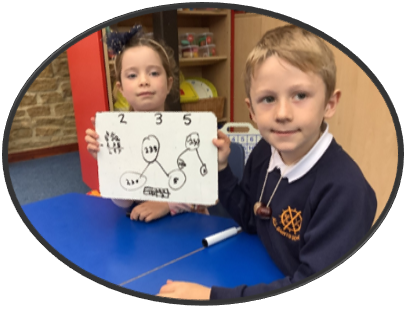
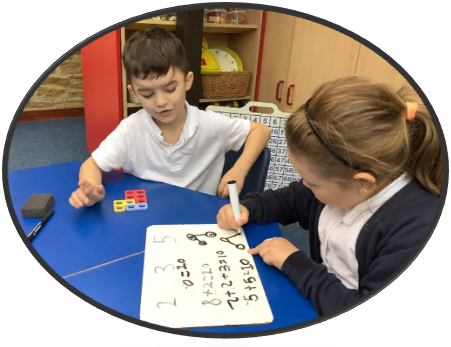
We implement a mastery curriculum that inspires children to be the best that they can be, using the Concrete, Pictorial and Abstract (CPA) approach to give children the best possible chance of embedding those core concepts before building on them and applying them.
The Teaching for Mastery Model focuses around 5 strands of Maths and is a sequential model of teaching, which is taught across the school.
The term ‘Teaching for Mastery’ captures what it means for anyone to learn mathematics successfully. Teaching for Mastery consists of the following five components, or strands:
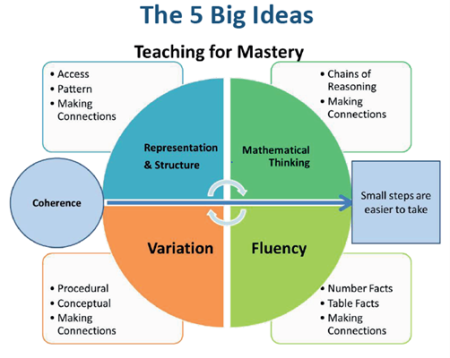
The model consists of:
Coherence - Lessons are broken down into small, connected steps that gradually unfold the concept, providing access for all children and leading to a generalisation of the concept and the ability to apply the concept to a range of contexts.
Representation and Structure - Representations used in lessons expose the mathematical structure being taught, the aim being that students can do the maths without recourse to the representation.
Mathematical Thinking - If taught ideas are to be understood deeply, they must not merely be passively received but must be worked on by the student: thought about, reasoned with and discussed with others.
Fluency - Quick and efficient recall of facts and procedures and the flexibility to move between different contexts and representations of mathematics.
Variation - Variation is twofold. It is firstly about how the teacher represents the concept being taught, often in more than one way, to draw attention to critical aspects, and to develop deep and holistic understanding. It is also about the sequencing of the episodes, activities and exercises used within a lesson and follow up practice, paying attention to what is kept the same and what changes, to connect the mathematics and draw attention to mathematical relationships and structure.
This model is used to ensure that children are given opportunities to develop their own skills and are exposed to each area on a constant basis.
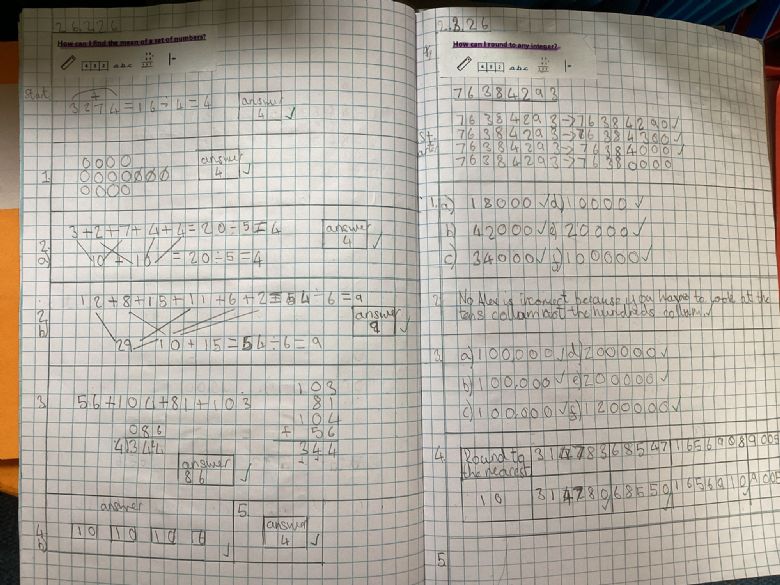
EYFS: In the Early Years Foundation Stage (EYFS), mathematics is taught through practical, hands-on experiences that encourage children to explore numbers, patterns, shapes and measures in meaningful ways. Through play, discussion and everyday activities, children develop their counting skills, understanding of number relationships and confidence in solving simple problems. By being immersed in a number-rich environment, including mathematical vocabulary, EYFS children develop the knowledge and confidence they need for future success in mathematics.
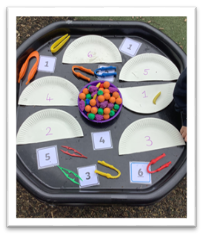
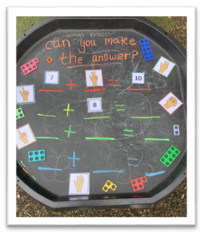
Chilren are introduced to numbers and their values through the Mastering Number scheme. This teaches the children to subitise (to perceive a number of items at a glance, without counting) and to count accurately. We identify and sequence small steps in the reception year, in order to ensure that all children learn and apply the facts and methods to wider problem-solving. Children leave our Acorns classroom with a strong sense of number, feeling confident and able.
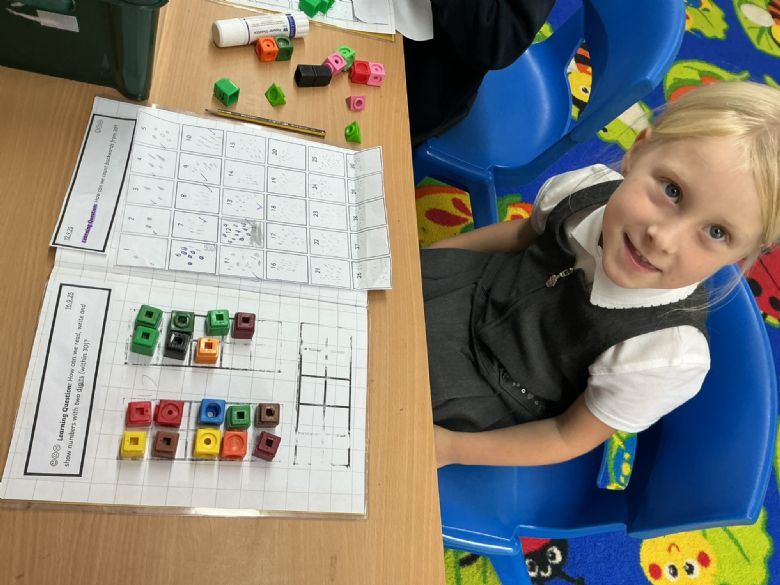
Mastering Number continues to be taught throughout Year 1 and into Year 2. It is a nationally recognised programme that helps children develop a strong understanding of number from the earliest stages of their education. Through short, daily sessions, pupils explore key mathematical concepts such as counting, number bonds, place value and calculation strategies in a practical and engaging way. The programme focuses on developing fluency and flexibility with numbers, enabling children to recognise patterns, make connections and apply their knowledge confidently. By securing these fundamental skills and concepts early, Mastering Number provides the strong foundations needed for future success in mathematics, ensuring that children are well-prepared to tackle more complex ideas as they progress through the curriculum.
Times tables:
Learning times tables is essential because it helps children develop confidence and fluency with numbers. Quick recall of multiplication and division facts supports learning across many areas of maths, enabling children to solve problems more efficiently and build a strong foundation for future mathematical success.
At All Saints, we begin our understanding of multiplication using concrete and pictorial methods, ensuring that the children fully understand the calculations before they go on to learn them by heart.
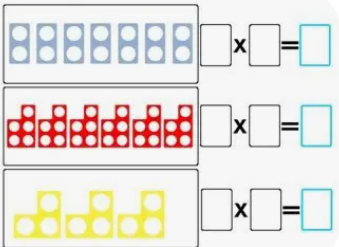
These concrete and pictorial representations are referred to frequently and used to scaffold children’s understanding as they work through learning all 12 of the times tables, ready for their Multiplication Times Tables Check at the end of year 4.
 Timetables Rock Stars is a programme we use to develop fluency of these facts. See our Timestables progression below.
National Numeracy Day 2026
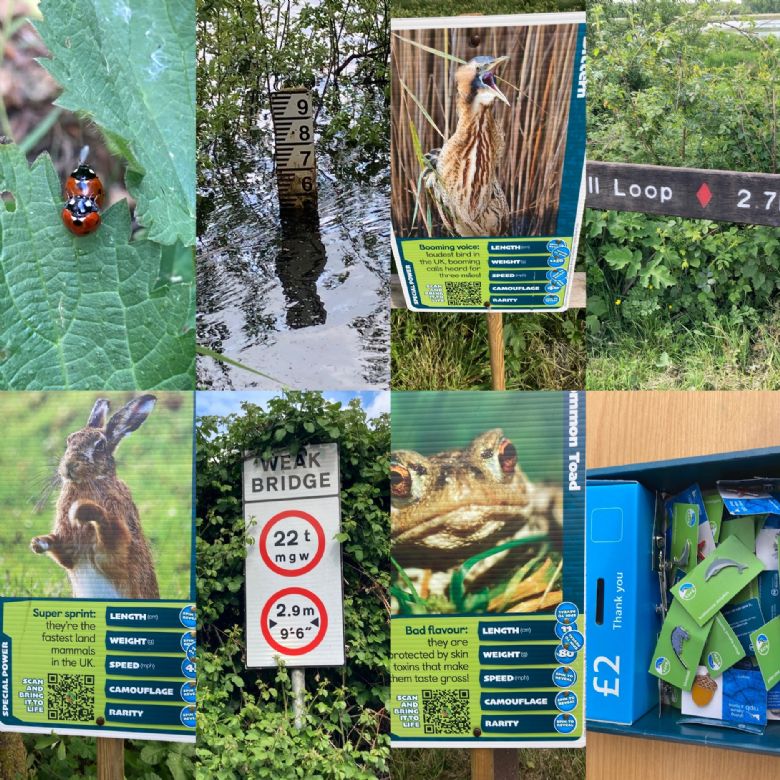
We are always looking for ways to engage our wider community in our curriculum work through national celebrations and events. Thank you to all of the families who looked for numbers and representations of numbers in their environment for National Numeracy Day this year. We have had some very imaginative photos submitted! Well done to the winners: Aaliyah and Theodora!
Pupil Voice
“I feel confident with my maths,” Ella-Rai. 
“I like maths because it helps me do other things,” Maddie.
“I’ve got so much better at my times tables this year,” Leah.
“I enjoy maths, it’s fun,” Rhys.
How to help at home
Maths with Michael- has maths changed?
https://play.ttrockstars.com/?cb=1698320830025
Parental engagement is an important part of the work we do to establish our learners as mathematicians. Below is the presentation from our recent parents and carers maths information event, where we welcomed guest speaker Luke Oaks, Boolean maths specialist to talk us through the mastery approach. It was an enjoyable evening and the parents attending went away with a clear understanding of how we teach maths in our school.
Jesus says, “All things are possible if you believe.” Mark 9:23